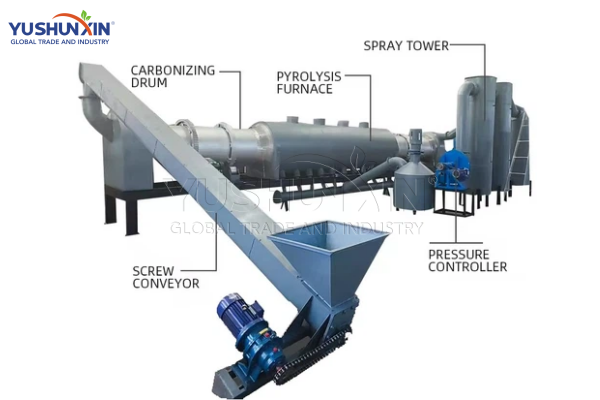
A biomass carbonization plant project at a large industrial site requires an integrated plan for feedstock, utilities, material flow and emission control. The biomass carbonization plant project starts with the biomass supply and the required char output, then connects drying, continuous carbonization, syngas handling, cooling and screening. industrial engineering methods help the team coordinate equipment, buildings, power, maintenance access and operator flow before construction. The plant must fit the available land without blocking future expansion or creating a bottleneck at the boundary with existing factories. A well-defined project brief gives suppliers and contractors the same technical basis, so the owner can compare capacities, utilities and delivery schedules without hidden assumptions.
Which site studies belong at the start of a biomass carbonization plant project?
The team maps biomass sources, transport routes, storage volume and seasonal variation before it selects the furnace. A large industrial biomass carbonization planning also checks soil capacity, flood risk, road access, fire protection and the room required for future modules. Electrical supply, water, drainage and the route for product dispatch determine how the processing line fits the site. The study records the distance between feedstock storage and the dryer, because excessive handling increases dust and operating cost. Existing buildings and underground services may restrict equipment placement. Engineers use measured site data to prepare the layout and avoid a late move of heavy machinery. The result is a site plan that supports construction and long-term maintenance.
How does feedstock preparation shape industrial carbonization facility design?
Moisture, particle size, ash and contamination decide the drying duty, feeder type and reactor residence time. A plant that receives wood waste, agricultural residue and palm shell needs a defined blending method and a laboratory routine for each delivery. A biomass carbonization facility project design reserves space for receiving, screening, temporary storage and fire-safe separation of wet material. The dryer and feeding machinery must deliver a stable flow without compacting or bridging the biomass. The project team also plans how to remove stones, metal and oversized pieces before the furnace. A clear feedstock specification protects the continuous carbonization line and gives the operator a practical basis for product quality and throughput.
Which utility and gas-handling systems support a large carbonization production line?
The site needs reliable power for drives, fans, controls and lighting, plus water for cooling and fire protection. The palm charcoal production line layout illustrates how downstream char preparation can share space and handling equipment with the furnace. Syngas from carbonization can supply heat to the dryer or another industrial user, but the project must balance gas production with demand and provide a safe surplus route. Ductwork, scrubbers, fans and pressure controls require access for inspection. The engineering team also defines instrument air, compressed air and maintenance clearances. These utility decisions influence both capital cost and the plant’s ability to operate continuously without wasting energy or stopping the reactor.
Which phased execution plan reduces risk for an industrial carbonization project?
A phased plan starts with engineering, permits and long-lead equipment, then moves through civil works, installation and system testing. Each phase has a measurable completion criterion and a responsible owner. The project team tests the feeder, dryer, furnace, gas system and discharge equipment separately before the first integrated run. A performance test confirms throughput, carbon yield, energy use and emissions with the specified feedstock. The owner reserves space and utility capacity for a second line only after the first plant proves its operating case. This sequence controls capital exposure and gives operators time to learn the process. It also creates a documented basis for deciding whether the next industrial site should repeat the same design.
Conclusion for industrial site owners and carbonization developers
A biomass carbonization project succeeds when feedstock, site services, furnace capacity and product handling follow one coordinated plan. Large industrial sites need early studies of power, water, transport, fire protection and the space required for maintenance. A carbonization project engineering advisors that reviews the process and utility interfaces helps the owner avoid expensive changes after construction starts. The project team should also define staged performance tests and a measured plan for future expansion. The continuous carbonization plant reference appears at https://www.ysxcharpro.com/how-does-the-continuous-carbonization-furnaces-work/ for the next site evaluation.