A continuous carbonization furnace project becomes easier to finance when the owner separates the core furnace from the complete production system and presents a measured capital plan. The continuous carbonization furnace capex includes the dryer, feeder, furnace, syngas treatment unit, discharge machinery, screening equipment and installation. capital expenditure also covers civil works, utilities, commissioning and working capital. Public funding can reduce the amount that private investors contribute, but the application needs a clear technical route and a defensible operating case. The project team therefore combines equipment specifications, energy data and environmental benefits before approaching a grant programme or development bank.
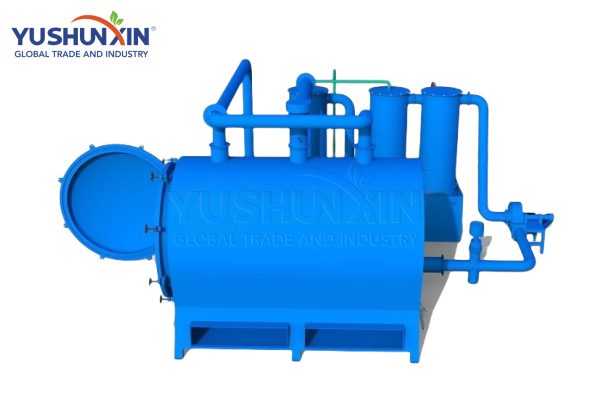
Which cost blocks belong in a continuous carbonization furnace capex estimate?
The estimate starts with process machinery and then adds electrical controls, foundations, ducting, piping, insulation, transport and erection. A public funding for a continuous carbonization furnace application also needs training, commissioning, spare parts and a contingency for site conditions. The owner keeps optional items such as heat recovery, briquetting and a second dryer outside the base scope so reviewers can compare projects on the same boundary. Each block carries a quantity, price source and delivery assumption. The resulting schedule shows how public support lowers the initial cash requirement without hiding the full cost of a working carbonization line. That transparency improves both grant review and procurement control.
How do capacity and feedstock conditions change furnace investment cost?
A furnace sized for one biomass type may need a larger dryer, stronger feeder or different refractory when the project changes moisture, ash content or particle size. The buyer gives every supplier the same required throughput and product specification. A carbonization furnace investment cost planning compares a single-line configuration with a modular expansion and identifies the utility capacity that each phase needs. The continuous carbonization furnace operating principle design explains how residence time, heat transfer and syngas flow influence the equipment selection. Stable biomass supply matters as much as the quoted capacity, because an underused carbonization plant still carries fixed cost. The investment plan should match the furnace and handling equipment to the volume that the owner can actually collect.
Which public funding criteria align with a carbonization project?
Grant programmes often ask for emissions reduction, waste diversion, local employment and a clear measurement method. A biochar project can document stable carbon storage, residue utilization and fossil-fuel substitution when the plant captures syngas for heat. The applicant also needs permits, land tenure, utility agreements and a credible operating team. Public support may cover feasibility, equipment, infrastructure or commissioning, but each programme has different eligibility. The project team builds one evidence file and maps it to the funder’s criteria instead of writing a separate technical story. That preparation reduces the risk that a strong carbonization concept fails because the application lacks measured data.
How does the owner control cost and performance after the funding award?
The contract fixes the equipment boundary, capacity test, delivery schedule and spare-parts list before manufacture begins. The owner tracks design documents, factory tests and site progress against the same cost baseline used in the funding application. A performance test measures feed rate, char yield, energy consumption and syngas use under a sustained run. Any change to feedstock or capacity passes through a priced change-control process. The operating team records maintenance hours and output during the first year so the project can compare actual results with the approved case. These controls protect public funds and give private investors evidence that the continuous carbonization production line performs as planned.
Conclusion for carbonization project owners and funding applicants
Public funding can lower the initial cost of a continuous carbonization furnace, but it cannot replace a complete technical and financial plan. The applicant needs a full equipment boundary, measured feedstock, environmental evidence and a credible operating budget. A carbonization project investment advisors that prepares the cost schedule and performance criteria helps the owner present one consistent project to lenders and grant reviewers. The contract should also connect payment to a sustained capacity test. The carbonization furnace investment reference appears at https://www.ysxcharpro.com/whats-the-price-for-a-continuous-carbonization-furnace/ for the next funding review.