The biomass carbonization plant cost per ton compares the cost of treating a residue with the fee that the company pays to dispose of it, and that comparison decides whether the investment pays for itself. You, as an industrial company manager or as a project developer, examine the biomass carbonization plant cost per ton against the current disposal invoice before the equipment order. The unit cost of the plant then becomes a figure the finance team can compare.
Which cost items form the cost per ton?
The capital recovery, the fuel for the dryer, the electricity of the drives, the labour of the shift and the maintenance of the wear parts form the cost of each tonne of residue. A disposal cost reduction with biomass carbonization review divides the annual cost by the tonnage that the plant actually processes, because an underused line carries a higher unit cost. You also include the transport of the residue to the plant, since a long haul erases the saving. The cost per ton then reflects the full chain.
How does the disposal fee enter the comparison?
The landfill fee, the transport to the landfill and the administrative cost of the manifest form the baseline that the plant replaces. A palm charcoal line cost per ton shows the same calculation for a different residue, and that reference helps the industrial company fix the assumptions. You compare the two figures over five years, because the disposal fee usually rises while the plant cost stays stable. The gap between the two lines is the saving.
How does the plant reduce the cost over time?
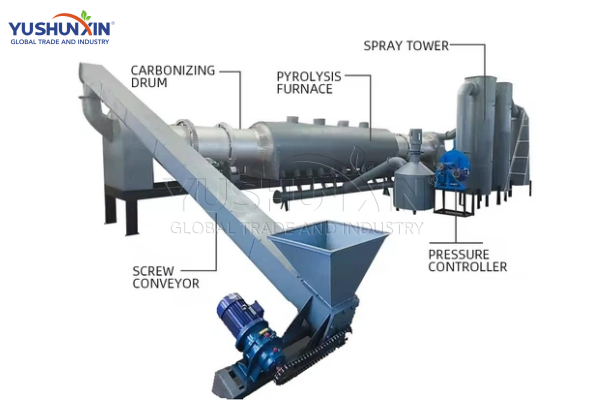
A continuous reactor that returns the syngas to the burner reduces the external fuel bill, and that reduction lowers the cost per ton each year. A cost per ton of a carbonization plant improves further when the plant sells the char, because that revenue offsets part of the cost. You keep the maintenance schedule, since a worn screw consumes more energy. The plant then shows a declining cost curve instead of a flat one.
How does the company verify the saving?
A monthly report with the tonnage processed, the total cost and the char revenue gives the finance team the achieved cost per ton. You compare that figure with the disposal invoice of the same month, and the difference is the saving. The report also shows the months in which the plant ran below capacity, because those months carry a higher unit cost. The board then decides on the second phase with measured data.
Conclusion for industrial companies and project developers
Biomass carbonization lowers the disposal cost when the cost per ton stays below the disposal fee and when the plant sells the char that it produces. A carbonization cost per ton advisors team that supplies the cost model, the energy balance and the revenue plan helps the company build a case that the board accepts. The disposal fee keeps rising in most regions, and a plant with a stable unit cost protects the operating budget. If your team needs a reference for the line configuration and the cost scope, you can learn more about https://www.ysxcharpro.com/whats-the-price-for-a-continuous-carbonization-furnace/ before the next budget review.