A biomass power generation plant technical route becomes future-proof when the plant can accept a changing feedstock, add a second product and meet a tighter emission limit without a full rebuild. You, as a project developer or as a recycling company manager, examine the biomass power generation plant technical route against the residues that the region will produce in ten years. The technology roadmap then links each phase of the investment with the market that the plant will serve.
Which technology choices make a biomass plant future-proof?
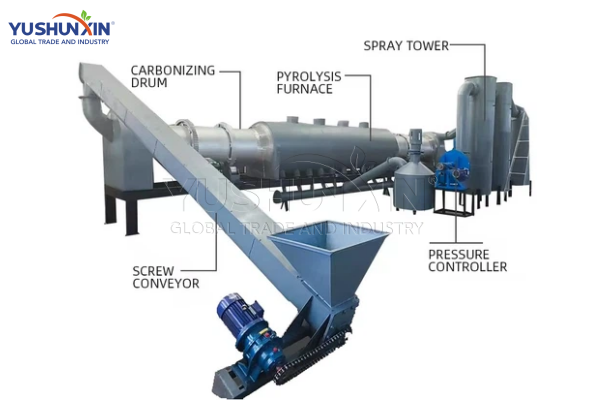
A continuous reactor with a flexible feeding system accepts several residues, and that flexibility protects the plant when one supplier disappears. A technology roadmap for a biomass power plant also selects a gas cleaning design with spare capacity, because the emission limit tightens over time. You compare a modular unit with a single large unit, and the modular design usually wins when the demand is uncertain. The palm charcoal line as a biomass route adds a product that the plant can sell when the power price falls.
How does the roadmap handle feedstock changes?
The residue mix of a region shifts with the harvest, the industry and the forestry policy, and a plant that cannot follow that shift loses availability. You design the dryer and the feeding section for a range of moisture and particle size, and that range protects the throughput. The roadmap also reserves storage capacity for a second residue, because a diversified supply reduces the price risk. The plant then adapts without a new equipment package.
How does the plant add carbon removal revenue?
The char that the carbonization section produces can enter the removal market when the process documents the stable carbon, and that second income protects the plant during a low power price. A future-proof biomass power technology therefore includes the weighing, the sampling and the data logger from the first phase. You register the monitoring plan before the second phase, and that plan reduces the cost of the later certification. The revenue then follows the product and the removal unit.
How does the developer phase the investment?
A first phase with the power island and the carbonization section proves the concept, and a second phase adds the briquetting line and the second reactor. You reserve the land and the utility capacity for the second phase, and that reservation costs little at the start. The financing then follows the proven performance of the first phase. The plant reaches full capacity without a single large commitment.
Conclusion for project developers and recycling companies
A future-proof biomass plant combines a flexible feedstock, a scalable gas cleaning and a second product, and the roadmap sequences those elements across two phases. A biomass technology roadmap advisors team that supplies the feedstock study, the phasing plan and the monitoring design helps the developer protect the investment. The demand for renewable capacity and for removal units keeps growing, and a plant with two revenue lines serves both markets. If your team needs a reference for the line configuration and the roadmap scope, you can learn more about https://www.ysxcharpro.com/how-does-the-continuous-carbonization-furnaces-work/ before the next planning review.