A complete biochar solution covers feedstock preparation, carbonization, cooling, screening and packing, and each of those steps influences the carbon content that a removal programme registers. You, as a recycling company manager or as a project developer, configure the biochar production for carbon credits as one integrated line instead of a group of separate machines. That integration produces a documented tonnage of stable carbon and a product that agricultural buyers accept.
Which stages form a complete biochar configuration?
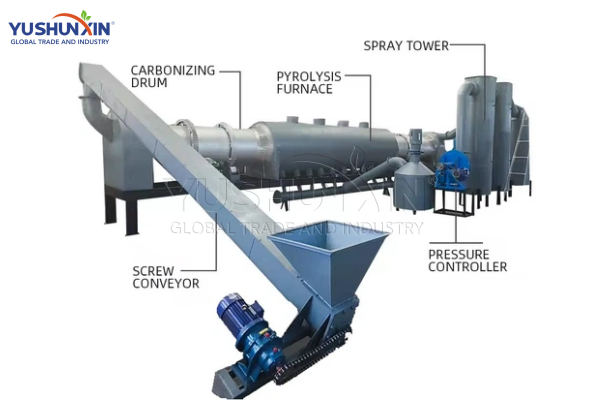
The shredding and drying stage prepares the biomass and removes the moisture that would otherwise consume process heat. The continuous carbonization reactor converts that material into char and releases combustible gas, and the gas returns to the burner or to a heat recovery loop. Cooling, grinding, screening and packing follow, and those steps define the particle size that the market receives. Your engineering team lists the capacity of each stage in one table, and that table shows whether the line reaches the target output or whether one unit limits the plant.
How does the configuration support carbon credit registration?
The registration requires a mass balance that records the dry feedstock that enters the reactor and the carbon that leaves in the product. A complete biochar production solution configuration therefore includes weighing equipment, temperature sensors and a data logger, because those instruments produce the record that the auditor reviews. Your laboratory analyses the carbon content of each shift, and that analysis becomes the basis of the removal claim. A documented configuration keeps the registration on schedule and protects the value of every issued unit.
How does the solution integrate with existing recycling operations?
A recycling company that already collects green waste or agricultural residue can connect the new line to its existing intake and storage area, and that connection reduces the civil works. A charcoal production line integration review also checks the power supply and the ventilation capacity of the host site, because those utilities must serve the final configuration. Your team reserves space for a second module, and that reservation allows growth without a new building. The same crew then operates both processes with one maintenance schedule.
How do you build the revenue case for the solution?
The case combines the sale of biochar for soil application or for fuel with the revenue from removal units, and those two lines follow different contract cycles. A biochar solution integration for recycling companies review also includes the gate fee that the company charges for the residue it receives, because that income covers part of the operating cost. Some producers also develop technical products such as activated carbon when the quality of the char allows that route, and that option supports a higher price per tonne.
Conclusion for recycling companies and project developers
A complete configuration converts residue into a documented carbon product and into a marketable soil amendment. A biochar solution integrators team that supplies process data, instrumented equipment and registration support helps the developer secure both revenue lines. A stable product also protects the price with agricultural buyers, and that stability supports the cash flow of the plant. If your team needs a reference for the line configuration and the monitoring scope, you can learn more about https://www.ysxcharpro.com/product/palm-charcoal-production-line/ before the next design review.