A carbonization plant releases flue gas, dust and condensable vapours, and the permit defines how much of each stream the site may release, so you, as a recycling company manager or as a plant engineer, design the gas path around that limit. The biomass carbonization plant environmental compliance package covers the sealed feeding, the combustion control, the gas cleaning train and the monitoring instruments. The biomass carbonization plant environmental compliance package then protects both the operating licence and the working environment of the plant.
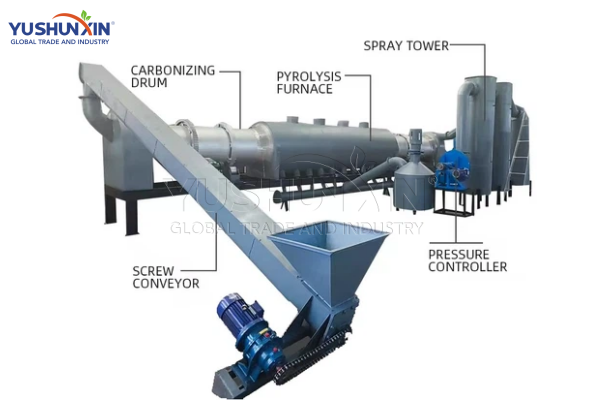
Which emission sources appear in a carbonization plant?
The reactor releases combustible gas, tar vapour and fine char, and the combustion of that gas produces nitrogen oxides and carbon monoxide. The dryer releases moisture and dust when the feedstock is dry and dusty. The discharge and screening sections release fine carbon that requires extraction. Your engineering team maps these three groups on the layout drawing, and that map defines the monitoring points of the plant.
Which equipment keeps the plant inside its limits?
A cyclone and a bag filter house remove particulate matter from the flue gas, and the filter must be sized for the maximum dust load of the worst feedstock. A thermal oxidiser or a scrubber handles the tar vapour and the condensable compounds when the local rule requires that step. A continuous carbonization furnace gas cleaning arrangement with sealed transfer points also reduces fugitive dust inside the building. Your engineers record the pressure drop of each unit, because that figure shows when the filter requires cleaning.
How do you plan compliance before construction?
The permit file contains the process description, the emission calculation, the monitoring plan and the maintenance procedure. A biomass carbonization emission limits review also fixes the height of the stack and the location of the sampling ports, and those two items influence the layout of the site. Your project team confirms the local emission standard before ordering the equipment, because a late discovery forces a redesign of the gas train.
How do you maintain compliance during operation?
The operating team records the running hours of the filter, the cleaning cycle and the replacement date of every bag, and that record supports the annual inspection. A carbonization plant compliance planning document defines the alarm limits for temperature, oxygen and dust concentration, and those limits trigger a corrective action. Your laboratory samples the flue gas periodically, and the result confirms that the plant operates inside its design envelope. The maintenance plan then keeps the compliance result stable through the year.
Conclusion for recycling companies and plant engineers
Compliance in a carbonization plant comes from a gas path that is designed for the worst operating condition and from a maintenance routine that the operators follow. A carbonization compliance advisors team that supplies process data, monitoring plans and commissioning support keeps the plant inside its permit from the first shift. A compliant plant also protects the workforce and the neighbouring community, and that protection sustains the licence of the site. If your team needs a reference for the gas cleaning scope and the monitoring plan, you can learn more about https://www.char-molder.com/product/continuous-carbonization-furnace/ before the permit application.