A regional waste programme needs a treatment route that absorbs the residue collected every season, and a charcoal briquette line converts that residue into a product with a local market, so you, as a programme manager or as a recycling company owner, match the charcoal briquette production line capacity to the volume that the programme actually collects. The charcoal briquette production line capacity then defines the storage requirement, the manpower of each shift and the size of the drying section. A capacity that matches the collection curve keeps the plant busy without building unnecessary infrastructure.
How do you estimate the capacity that a programme needs?
The estimate starts with the annual residue volume, continues with the seasonal distribution and finishes with the moisture range of the material. A programme that collects rice husk, palm shell or wood waste needs a drying section sized for the wettest month, because wet feedstock slows the carbonization stage. Your analyst converts those figures into tonnes per hour and compares the result with the available equipment sizes. The capacity planning for a charcoal briquette line then includes a margin for the growth of the collection network.
Which equipment defines the achievable capacity?
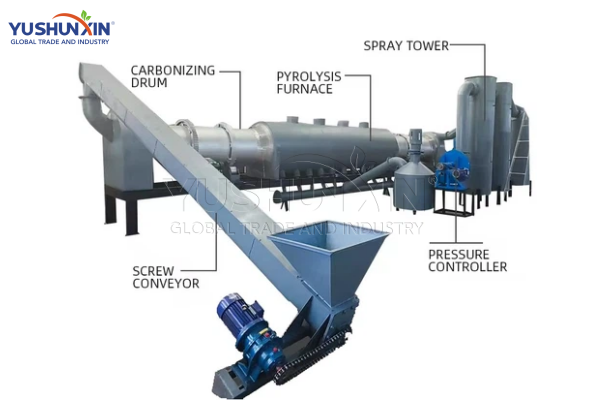
The dryer, the continuous carbonization furnace, the grinder, the mixer, the briquette press and the packing machine form a chain, and the narrowest stage limits the output of the whole plant. A charcoal production line configuration that matches the dryer capacity with the furnace throughput avoids the bottleneck that appears in the rainy season. Buffer capacity between the stages absorbs short stops, and that buffer keeps the programme on schedule. Your engineering team verifies the running hours that the collection volume requires.
How does capacity affect the programme economics?
A larger line reduces the cost per tonne, because the labour and the fixed maintenance spread over more output. A briquette line capacity for regional programmes also changes the storage and transport requirement, and those two items influence the budget of the authority. The product revenue and the avoided disposal cost complete the financial picture, and your finance team presents both lines to the council. That presentation supports the decision on the equipment size.
How do you keep the plant at its design capacity?
The operating plan defines the maintenance intervals of the press, the extruder and the dryer, because those units suffer wear when the feedstock contains abrasive material. The production of a dense briquette also depends on the binder ratio and on the moisture of the char, and those parameters appear in the operating instruction. Your shift supervisor records the output and the consumption of each shift, and that record reveals the drift before it becomes a breakdown.
Conclusion for programme managers and recycling companies
Capacity selection decides whether a regional briquette plant runs at its design rate or carries idle cost through the year. A briquette line capacity advisors team that supplies drying data, capacity tables and commissioning support helps the programme match the equipment with the collected volume. A plant that runs at design capacity also delivers a reliable product volume to local buyers, and that reliability supports the revenue forecast. If your team needs a reference for the capacity options, you can learn more about https://www.ysxcharpro.com/product/palm-charcoal-production-line/ before the procurement decision.